欢迎来到 [蚂蚁街]
, 进入
2027宁波国际文具展
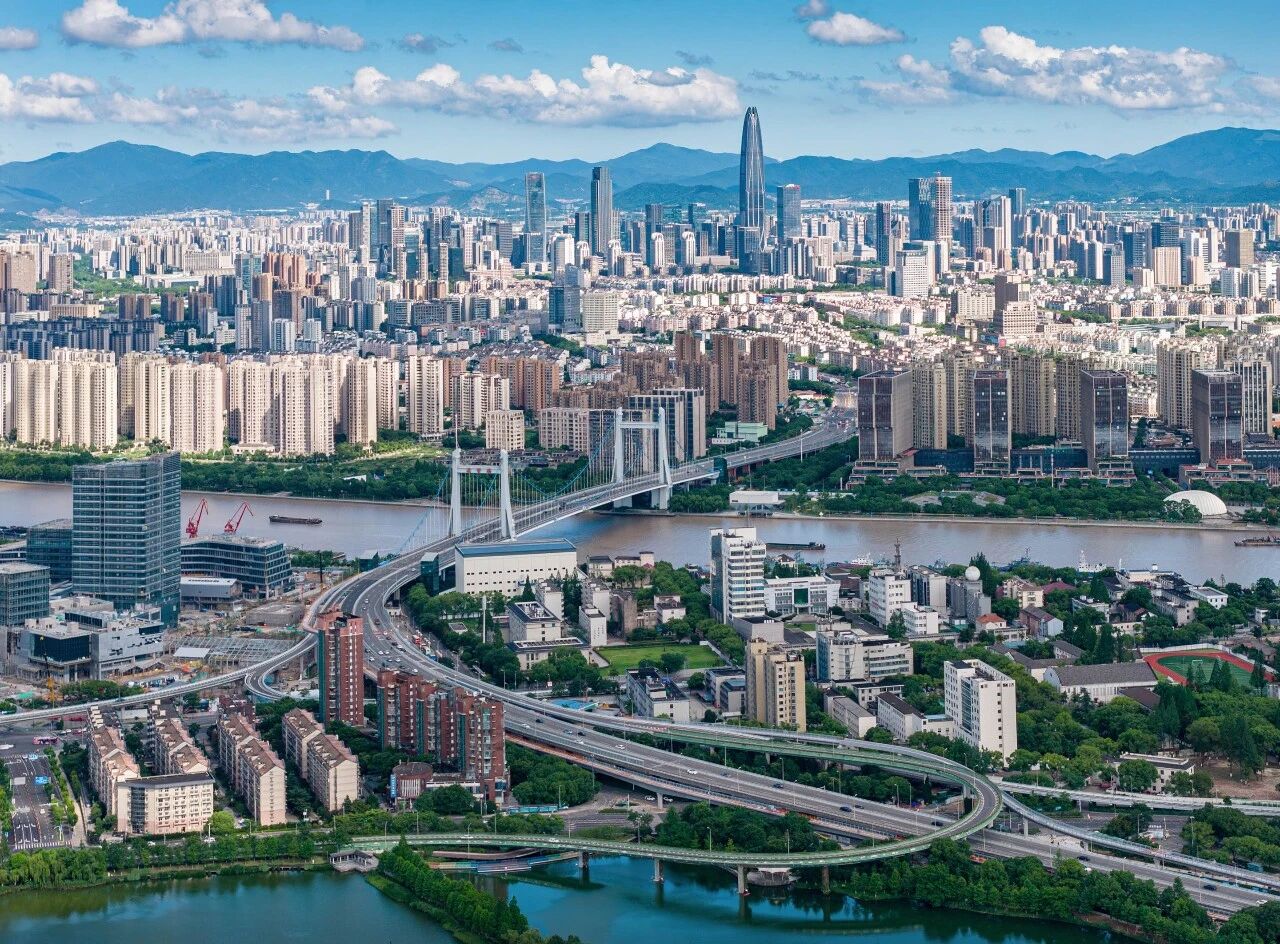
On November 20, the Ningbo Municipal Bureau of Statistics and the Ningbo Survey Team of the National Bureau of Statistics released the city’s economic data for January–October. The overall economy maintained stable operation while improving in quality.
In the first ten months, Ningbo faithfully implemented the decisions and arrangements of the CPC Central Committee and the State Council, as well as the work requirements of the provincial party committee and government. Staying committed to the general principle of pursuing progress while ensuring stability, the city focused on delivering the important requirements and the provincial overall development plan, leveraged policy effects and accelerated the development of new productive forces. The economy operated steadily with continuous quality improvement.
From January to October, the value-added of industrial enterprises above designated size rose 7.9% year on year. By industry, nine of the top ten sectors by value-added recorded growth, jointly driving industrial growth by 6.9 percentage points. Value-added in automobile manufacturing and computer, communications and other electronic equipment manufacturing grew 26.2% and 11.9% respectively, both reaching double-digit expansion. By enterprise scale, large enterprises posted 10.9% growth, medium enterprises 3.2%, and small enterprises 7.1%. In emerging industries, value-added of high-end equipment manufacturing, high-tech manufacturing and core digital economy manufacturing increased 13.6%, 10.1% and 9.6% respectively, all outpacing the overall above-scale industrial growth.
In January–September, the operating revenue of above-scale service enterprises (excluding wholesale and retail, accommodation and catering, finance and real estate development) increased 10.9% year on year, 1.4 percentage points faster than Jan–Aug. Revenue of technology service enterprises and high-tech service enterprises grew 9.0% and 9.9% respectively.
From January to October, the cargo throughput of Ningbo Zhoushan Port reached 1.19 billion tonnes, down 0.7%, including 580 million tonnes in the Ningbo port area, down 2.9%. Container throughput of Ningbo Zhoushan Port hit 38.73 million TEUs, up 6.8%, including 34.20 million TEUs in the Ningbo port area, up 5.3%. At the end of October, local and foreign currency deposits of financial institutions stood at RMB 4.33 trillion, and loans at RMB 4.88 trillion, up 7.6% and 6.9% respectively.
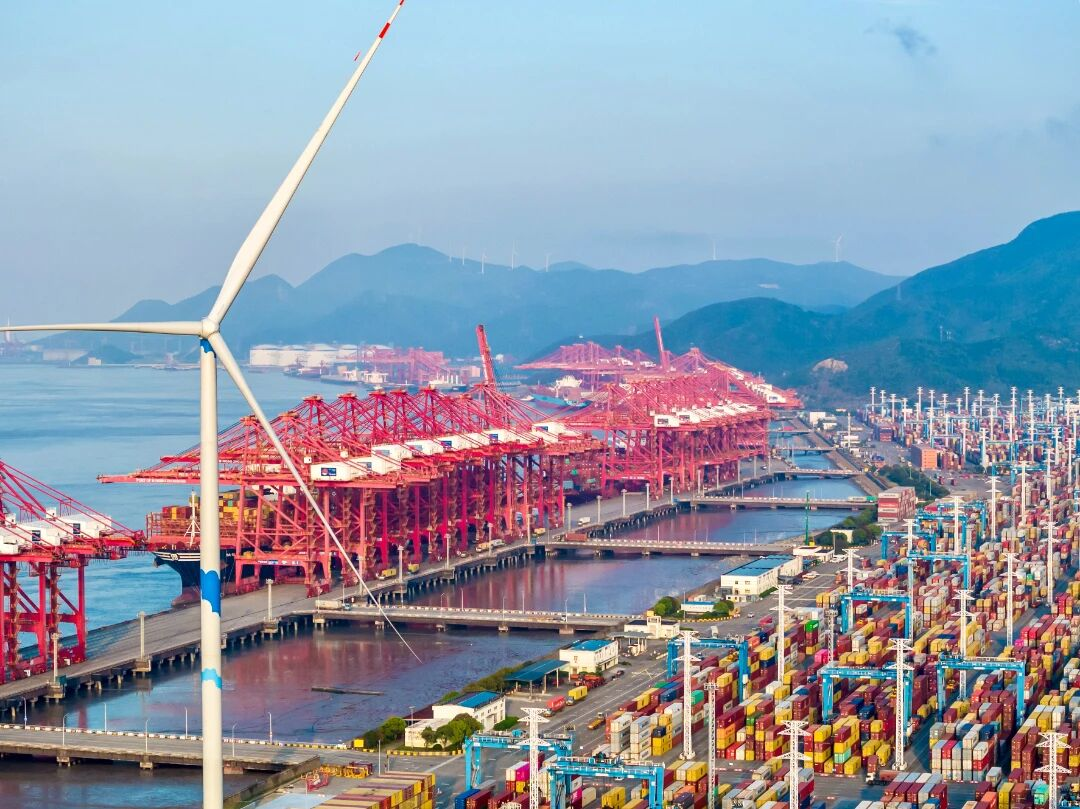
(Photo: Tang Jiankai, specially commissioned photographer of Ningbo Release)
Fixed-asset investment decreased 8.2% year on year in January–October. By segment, manufacturing investment grew 3.7%, 11.9 percentage points higher than total investment; infrastructure investment fell 1.6%, within which transport investment rose 1.0%; real estate development investment dropped 19.9%. Investment in core digital economy industries, high-tech industries and equipment manufacturing increased 39.7%, 16.3% and 14.9% respectively. Commercial housing sales area reached 4.91 million square metres, down 13.8%.
Total retail sales of consumer goods amounted to RMB 479 billion, up 1.8% year on year. Retail sales of consumer goods above designated size reached RMB 185.7 billion, down 0.1%. Sales of some upgraded products grew fast: retail sales of wearable smart devices and smartphones at above-designated-size units rose 1.9 times and 1.3 times respectively. Online retail sales by above-designated-size units climbed 15.9%, accounting for 41.8% of their total retail sales, 5.6 percentage points higher year on year.
Total foreign trade volume reached RMB 1.33 trillion, up 10.2% year on year, 1.4 percentage points faster than Jan–Sep. Exports stood at RMB 916.1 billion (+12.8%), and imports at RMB 413.2 billion (+4.7%). Private enterprises surpassed RMB 1 trillion in foreign trade, reaching RMB 1.05 trillion and growing 12.0%, contributing 9.3 percentage points to total trade growth and accounting for 78.8% of the city’s total. Trade with the EU, the US and ASEAN grew 11.9%, 6.6% and 13.1% respectively. Exports of mechanical and electrical products totalled RMB 536.6 billion, up 13.5%, representing 58.6% of total exports, with electric vehicle exports rising 1.9 times.
Urban CPI rose 1.2% year on year in January–October. Food prices fell 0.4%, while non-food prices increased 1.5%. In October, urban CPI went up 0.6% year on year, 0.3 percentage points lower than the previous month, and was flat month on month.
From January to October, the ex-factory price index (PPI) of industrial producers rose 3.3% year on year, and the purchasing price index of industrial producers increased 8.1%. In October, industrial producer ex-factory prices went up 8.2% year on year, with the gain widening by 1.9 percentage points; industrial producer purchasing prices rose 14.6% year on year, with the gain widening by 2.8 percentage points.
Overall, Ningbo’s economy maintained stable operation in the first ten months, with continued resilience in high-quality development. Meanwhile, the external environment remains complex and volatile; some enterprises face operational difficulties, effective demand remains insufficient, and the foundation for sustained recovery needs further consolidation. Going forward, Ningbo will pursue progress while maintaining stability, improve quality and efficiency, expand domestic demand, optimize supply, boost momentum and energize the market, striving to drive sustained economic growth toward innovation, higher quality and better performance.
Declaration: This article is sourced from Ningbo Release. Please contact us for removal should there be any copyright concerns.

 87